Your Reputation Was Built Offline. Make Google and ChatGPT Know It.
You have decades of customers, referrals and trust. Online, buyers searching Google or asking ChatGPT find a newer competitor instead. We close that gap with SEO, AEO and GEO run by senior strategists, measured in enquiries and revenue.
A decades-old shed builder got 51% more Google clicks within two months of its rebuilt pages going live
One program for Google rankings, Google Maps and AI answers
Senior-led, in plain English, reported against leads and revenue
Why established businesses work with Indexed
Most of our favorite clients have been around for decades: manufacturers, distributors, multi-location service companies and the firms that are the name everyone in their area knows. What they share is a strong offline reputation and an online presence that doesn't reflect it. Your history, reviews, team and track record are exactly what Google and AI assistants look for; most of it just isn't on your website yet. You deal with senior strategists, not a rotating account manager.
Rankings for the product, service and town searches new buyers make, so your reputation reaches people who haven't heard of you.
When a buyer asks ChatGPT, Perplexity or Google's AI who to call, we work to get you named, with dated screenshots.
Years in business, projects, people and reviews on the site show buyers and search engines why you are the safe choice.
Calls, form fills and pipeline from search each month, not a spreadsheet of keyword positions.
What the work has done for clients
Every figure links to the case study it comes from. Clients stay anonymous; the numbers are theirs.
Your reputation took decades to build. Search should reflect every year of it.
How we turn an offline reputation into search visibility
Every step runs through the Full-Stack Search Method™: technical SEO, content, links, local search and AI visibility as one program, led by senior strategists.
Start with what buyers see today
We search for your products and services the way a new buyer would, on Google, Google Maps, ChatGPT and Perplexity, and record who is shown instead of you and why. You get that as a personal video before you commit to anything. The first fixes usually sit on the website itself. Older sites often block search engines without anyone knowing: pages that can't be indexed, slow mobile pages, missing location details, content locked in images or PDFs. Google says its AI features use the same foundation as search, so these fixes come first and help in both places.
Turn old print and word of mouth into pages
Most established firms are sitting on content they have never put online. Product catalogs, spec sheets, brochures, project photo albums, press clippings and the answers your staff give on the phone can all become web pages. A scanned brochure in a PDF is hard to read on a phone; the same information as a product page, with clear headings, photos and a way to enquire, can rank and be quoted by AI assistants. Word of mouth works the same way: the stories customers tell about you and the reasons they recommend you are the material for case studies, project pages and FAQ answers. We collect it through short interviews with your team and turn it into pages in your own words, checking every price and claim with you first.
Reviews from customers who have stayed for years
Family businesses often have customers who have used them for decades and never left a review, because nobody asked. Those are the most persuasive reviews you can get: a customer who mentions the third roof you have put on their house, or the second generation of the family serving them. We set up a simple way to ask, by text, email or a card left after a job, and work through your longtime customer list first. The routine stays within the FTC's 2024 rule on fake reviews: no buying reviews and no incentives tied to a positive rating. Industry directories, trade associations, local press and supplier listings count too, and we make sure yours are visible and consistent. Our guide to a review request workflow shows the steps.
Family groups with several locations
Family groups often grow by opening a second branch, buying a competitor or taking over a business in the next town, and each step leaves its own website, phone number and set of listings behind. Search engines then see several partial businesses instead of one strong one. We map every location, brand, domain and listing first. If the branches trade under one name, we usually bring them onto one site with a page for each location, one Business Profile per staffed address under Google's guidelines, and the same name, address and phone details everywhere they appear. For a US storage operator with 65 locations, one system for location pages, listings and links took daily organic clicks from 150 to 920 in 14 months. See the case study.
When the next generation takes over marketing
Search often becomes a priority at the handover. The founder built the reputation in person; a son, daughter or new general manager inherits a website nobody has touched in years and a marketing budget that used to go on print and sponsorships. The risk at this point is change for its own sake: a new name, a new domain or a full rebuild that throws away twenty years of links and brand searches. We start by recording what already works, such as which pages bring calls, which listings drive visits and what longtime customers search for, then plan changes around it. We also get the founder's knowledge on the record while they are still around to share it.
Measuring calls without breaking your listings
For most family businesses the phone is still where the work comes in, so call measurement has to be right. We use call tracking on the website that swaps the displayed number for visitors arriving from search, while your main number stays the same in listings and directories, so years of consistent citations are left alone. Calls from your Google Business Profile come from the profile's own performance report. At the front desk, one question, how did you hear about us, recorded against each new customer, catches what software misses: the referral who searched your name first, or the buyer who asked ChatGPT. We also tag visits from AI assistants in analytics. Each month you see calls, form fills and booked work by source, next to what the program cost.
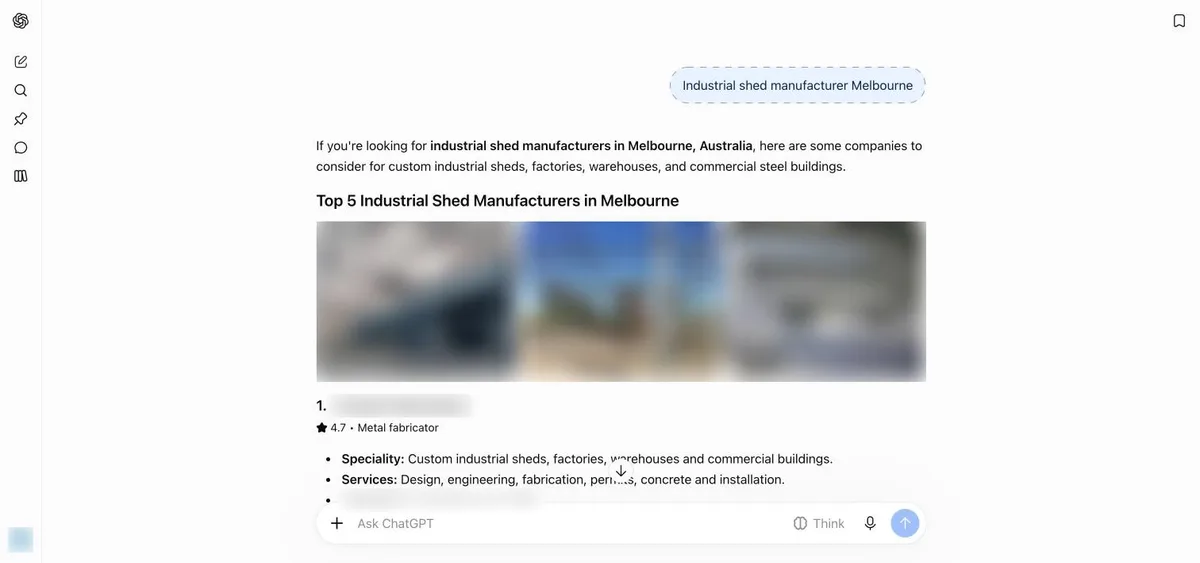
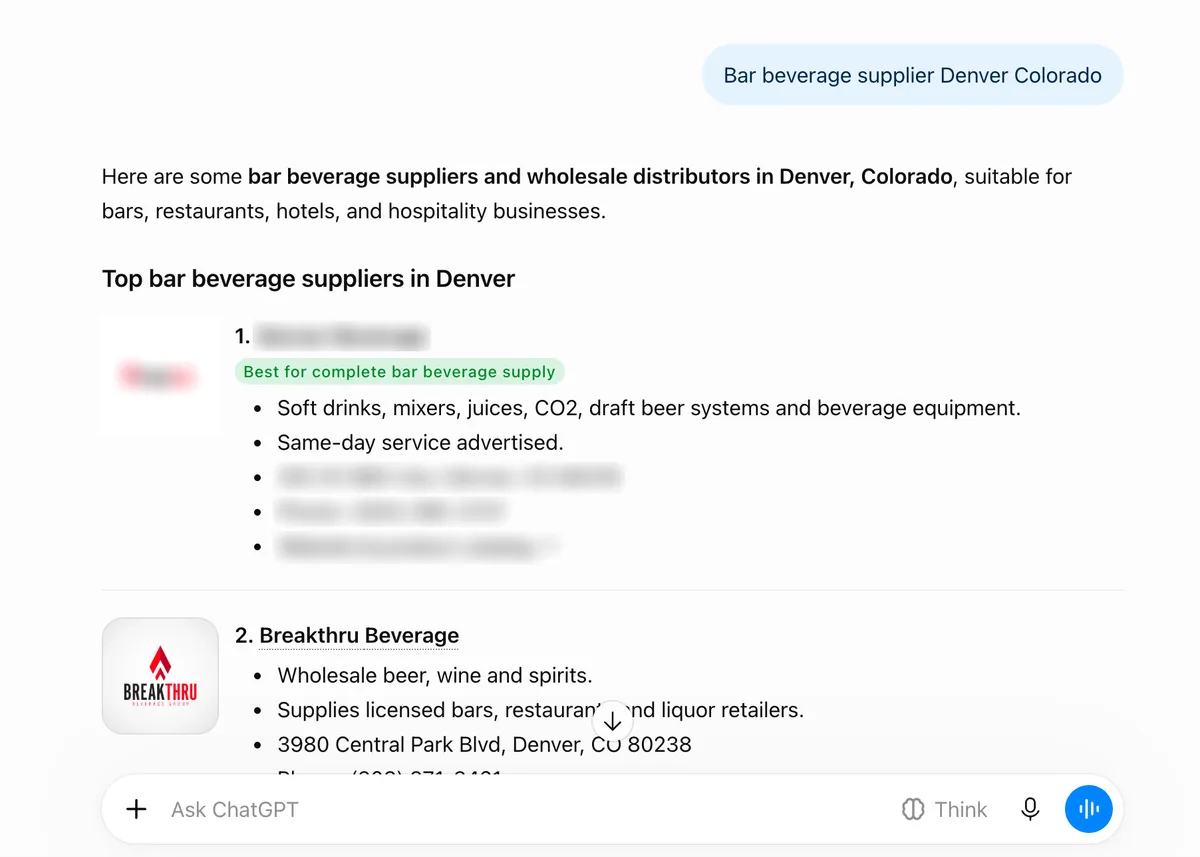
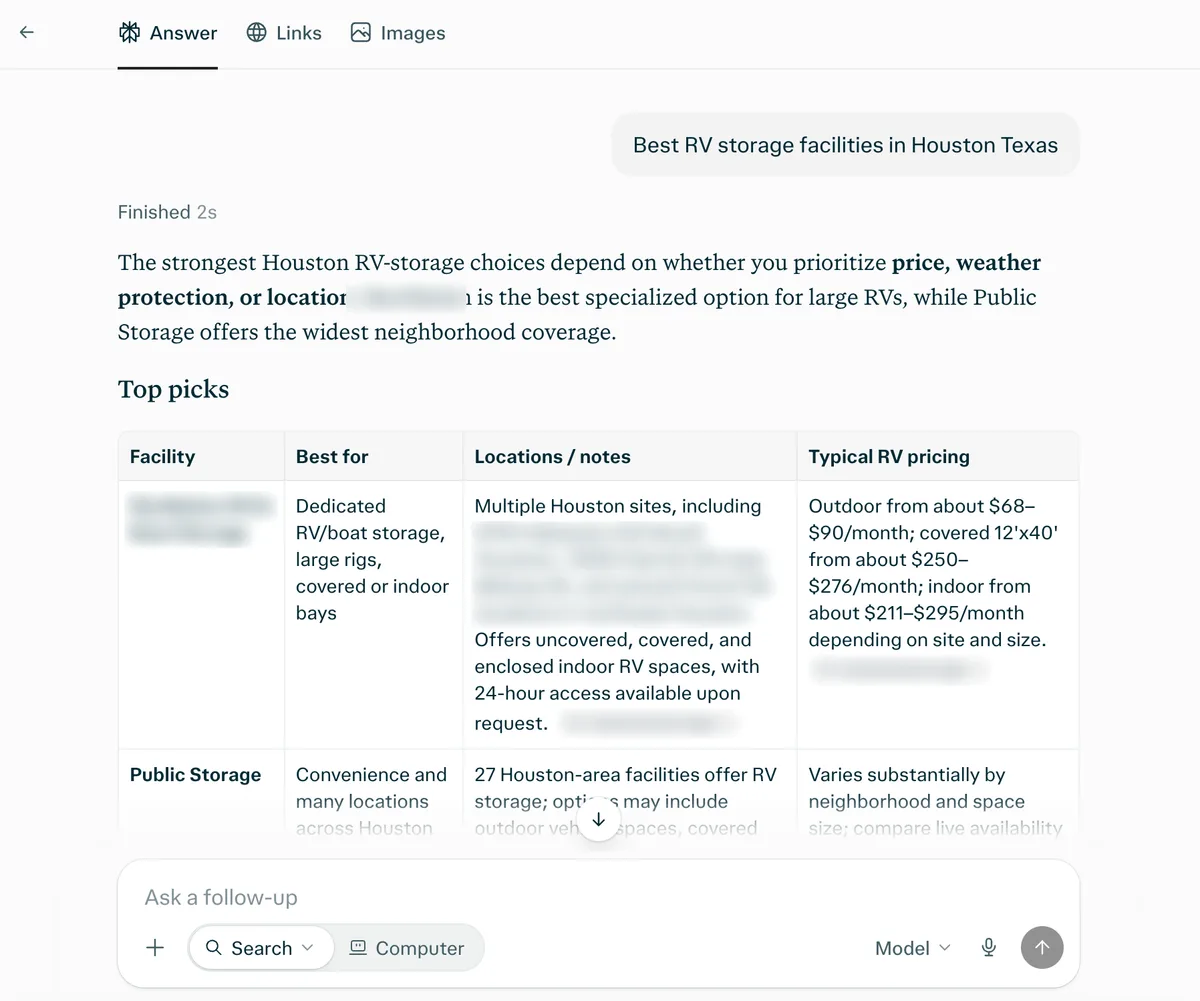
Recommended by ChatGPT, not just ranked on Google.
We asked ChatGPT and Perplexity the questions our clients' buyers ask. In 7 of the 10 answers we checked, our client comes first. The prompts are exactly as typed; client names are blurred because our case studies are anonymous.
Answered.
Do you work with family-owned and long-established businesses?
Yes, they are the clients we most like working with: established US businesses with a strong reputation offline and little to show for it online, from manufacturers and distributors to multi-location service companies. We also work with ecommerce, professional services and SaaS companies.
We get most of our work from referrals. Why do we need SEO?
Referrals still matter, but many of those buyers now check you on Google or ask ChatGPT before they call, and new buyers who have never heard of you start there. SEO makes sure your reputation shows up in both places, so referrals convert and new buyers find you.
Our website is old. Do we need a new one first?
Not necessarily. Many older sites can be fixed and extended, which is faster and cheaper. If a rebuild is the better option, we design and build it as part of the program, with search in mind from the start.
How much time will this take from our team?
Very little. We do the research, writing and technical work. Your team spends a short call or two sharing what they know, then reviews and approves pages.
How much does it cost?
You can start with a free video review of your site. The AEO Sprint is a one-time $2,000, 30-day project, and the full-stack managed service starts from $2,500 per month, scoped to your locations and goals. Prices are in USD.
How long before we see results?
Fixes to an older site can show up as soon as Google recrawls the pages, and one manufacturer we work with saw 51% more Google clicks within two months of its rebuilt pages going live. Content and reputation work takes longer, usually months rather than weeks, depending on your market.
Start free. Scale when it pays.
Every engagement starts with a free video review of your site. From there, run a 30-day project or hand the whole program to our team.
Personalized video review
A senior strategist records a video of your site covering Google rankings and AI visibility.
- Who buyers find instead of you, and why
- The fixes worth the most, in order
- In your inbox within days, yours to keep
The AEO Sprint
A senior specialist embedded with your team for 30 days. You end the month with work live, not a report.
- Week 1: we find the opportunities
- Week 2: we build the plan with your team
- Weeks 3 and 4: we ship the quick wins
Full-stack SEO, AEO and GEO
Our full team: strategy, technical SEO, content, links, local, AI visibility, web and analytics.
- Reported against enquiries, pipeline and revenue
- Senior strategists on every account
- Scoped to your goals, packages customized
Prices in USD. The Sprint is $2,000 once; managed packages start at $2,500 a month and are customized to your requirements.
Free video review
A senior strategist records a video of your site: where you rank, who buyers find instead of you and what to fix first.
Foundation
Technical fixes, call and form tracking, and your core pages and profiles brought up to standard so new work can rank.
Build
New and rewritten pages for the searches that lead to revenue, reviews and links under way, and a baseline of AI answers recorded.
Compound and report
Monthly reporting on enquiries, pipeline and revenue with dated AI answer screenshots, and more effort on whatever is working.
See what Google and ChatGPT say about your business
Send us your website. A senior strategist will record a video showing who buyers find instead of you, and what it would take to change that.
Get my free video review